
To end
gender‑
based
violence, we need a roadmap.
1 in 3 women experience intimate partner violence in their lifetime, and nearly half (45%) experience contact sexual violence. The negative physical, emotional, economic, and social impacts on survivors ripple outward to impact family members, social networks, and communities.
In 2023, the United States released its first ever National Plan to End Gender-Based Violence, outlining an evidence-based roadmap for prevention, response and systematic change. While changes in federal priorities paused the Plan's dissemination, its priorities remain grounded in evidence and continue to offer vital direction for communities.
Whether you’re policymaker, coalition leader, practitioner, advocate, or researcher, there is a role for you in advancing this work.


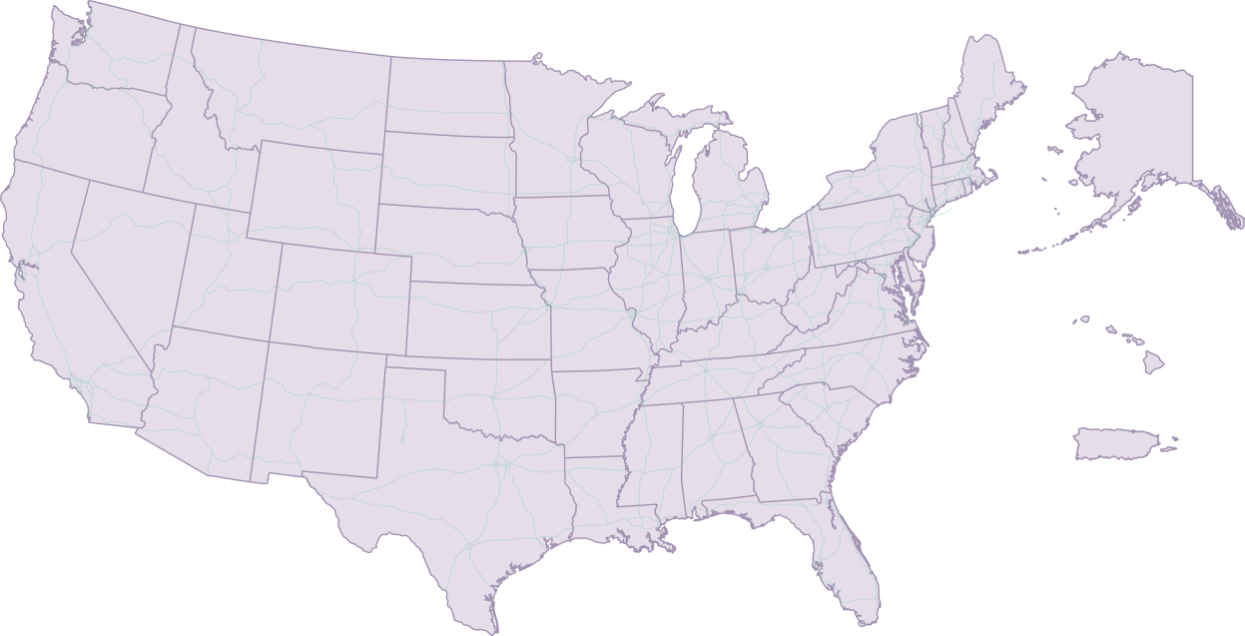
Explore GBV Data, Programming, and Policy Across the Nation
Select a state from the map below to get started. See territory and city links below. Additional territories and cities will be added following collaborations with new partners.
We have included GBV Data and Policy Briefs for every US state and selected additional geographic regions. Each brief provides prevalence data across sexual violence, intimate partner violence, stalking, and human trafficking, and policy information organized by selected National Plan priority areas.
Would you like to see your geographic region represented? Reach out to us using the Contact Form!
Select a city
Select a state or territory
Tools to Support Learning, Collaboration, and Action
We created the GBV state briefs because people on the front lines of GBV prevention and response asked for something better. The U.S. has many strong GBV data sources, policies, and programs, but they are dispersed across multiple platforms, compendia, and websites. Understanding the state-level GBV landscape requires accessing online dashboards and searching through lengthy reports. This project brings together state and local level GBV briefs, evidence summaries, conversation, tools and technical assistance, opportunities designed to support coordinated, gender-based violence prevention efforts.
Not all relevant data or policy could be included in the GBV briefs linked above. For state briefs, we prioritized information that was publicly accessible and available for most (if not all) states. We encourage you to explore additional state-specific resources. We have also started compiling briefs for cities and territories. However, these localities don’t always have the same public data and policy information that states do. To produce these briefs, we have partnered with a local GBV leader using a co- creation approach. The Philadelphia and Baltimore GBV Briefs were co-created this way with local leaders. If you would like to co-create a GBV brief with us, reach out through our Contact Form.
The resource hub below provides tools to support ongoing strategic planning and cross-sector collaboration for GBV prevention and response at the state, city, and community level.

The US National Plan to End Gender-Based Violence is a valuable resource for our field, providing an overview of evidence and outlining lessons learned and best practices identified over decades of advocacy and innovation. While we recommend the full 150-page resource, our 10-page Evidence Brief provides a high-level summary of the best evidence to support each of the National Plan priority areas.
State and city-level GBV leaders and front-line responders identified limited awareness of the National Plan among local front-line workers, advocates, and decision-makers as a barrier to implementation. In response, we created a PowerPoint slide deck summarizing the Plan’s evidence and recommendations, with speaker notes and guidance for use. This deck is based on our Evidence Brief providing a high-level summary of the best evidence to support each of the National Plan priority areas. We have also provided an additional slide deck including all National Plan Priorities, Goals, and Objectives for those ready to take a deeper dive into any of the priority areas.
The state briefs provided on this site were created in Summer 2026. Data and policies can change quickly! Our Methodology Overview provides detailed instructions on how to access the information compiled in the briefs, allowing users to check and update key pieces of information over time.
GBV data and policy information are abundant -but decentralized. Our team relied on diverse data and policy resources to create these tools. We created a curated, annotated directory of these resources so they can be of service for further exploration of GBV data and policy indicators.


Accelerating Local Uptake of the US National Plan to End Gender-Based Violence
This project helps states, cities and communities turn that evidence into action by providing tools to support the continued dissemination of key learnings from the National Plan, as well as localized summaries of GBV data, programming, and policy to support ongoing strategic planning and cross-sector collaboration.
An Invitation to Work Together
Watch our video to learn about the US National Plan to End Gender-Based Violence, and our tools to mobilize communities to take action, using local data and policy indicators.
Our collaborators are forging ahead
"Working with the Johns Hopkins Team on the GBV brief gave our city a shared foundation for a more coordinated use of data across agencies."

Wendy Lee
Deputy Chief, IPV Prevention
Mayor’s Office of Neighborhood Safety and Engagement (MONSE)
City of Baltimore
"Co-creating the GBV brief with the Johns Hopkins team was an enriching experience that allowed us to review national and local data and to discuss, clarify, and align definitions within a shared framework."

Azucena Ugarte
Director
Office of Domestic Violence Strategies
City of Philadelphia
“I cannot tell you how helpful this is. As you know, it is one of our CDC RPE objectives to gather and synthesize state and community level data and given all of our other work, it has been difficult to even get started. Truly, thank you so much.”

Nanee Sajeev
Director of Prevention & Education
Jane Doe Inc.
The Massachusetts Coalition Against Sexual Assault and Domestic Violence
Boston, MA
Together we can prevent violence
Ready to partner, request technical assistance, or learn more? We’d love to hear from you! Reach out to our research team using the contact form below.


Project Support and Acknowledgements
This project was supported by the Bloomberg American Health initiative based at the Johns Hopkins Bloomberg School of Public Health. The Bloomberg American Health Initiative, supported by Bloomberg Philanthropies, addresses pressing health issues in five critical areas, including addiction and overdose, adolescent health, the environment, food systems, and violence through education, research and practice.
Our GBV Data and Policy briefs, Evidence Briefs, and slide decks are tools to get you started. Need more help getting conversations started in your community? Reach out! This project offers a number of opportunities to kick-start conversations about GBV data to action, in the spirit of the National Plan. Opportunities include:
- Co-creation of city, territory, or tribal briefs: Creation of GBV briefs for a geographical area smaller than a state requires close collaboration with local partners to identify key data points, programming and policy.
- Co-creation of supplemental fact sheets: Our team can partner with local GBV leaders to dig deeper into data, programming, and policy aligned with a specific National Plan priority area, to support local action.
- Community Conversations: This project provides technical support and modest financial support for local meetings using our project tools to further integration of National Plan priorities and learnings into local planning efforts.
To learn more, reach out to our team using the Contact Form.
The Center for Global Women’s Health and Gender Equity
The Bloomberg American Health Initiative
Acknowledgements
We would like to thank the many people whose contributions made the resources available on this page possible. We extend a special thank you to all consultants who took part in early development of this project, including our two pilot state partners, Madison LaCure of the Maryland Coalition Against Sexual Assault and Caitlin Burke of the Ohio Alliance to End Sexual Violence and to our research team at The Johns Hopkins Center for Global Women’s Health and Gender Equity, including Madison Bates, Georgia Lavery Van Parijs, Cecily Jones, and Demi Bajela.